
Reading time: 4 minutes
Why do we dream? It is one of humanity’s oldest questions, and despite major advances in neuroscience, there is still no definitive answer. What researchers know today is that dreams are closely connected to how the brain functions during sleep and may serve several purposes related to memory, emotions, learning, and the processing of lived experiences.
Over the past few decades, advances in brain research have allowed scientists to better understand what happens while we sleep. Today, we know that dreams are associated with brain activity, particularly during certain stages of sleep. However, their exact purpose remains an ongoing subject of scientific investigation.
If you are looking for a broader introduction to dreams, their history, and the different ways they have been interpreted throughout time, read also What Are Dreams? A Complete Guide.
What Happens During Sleep?
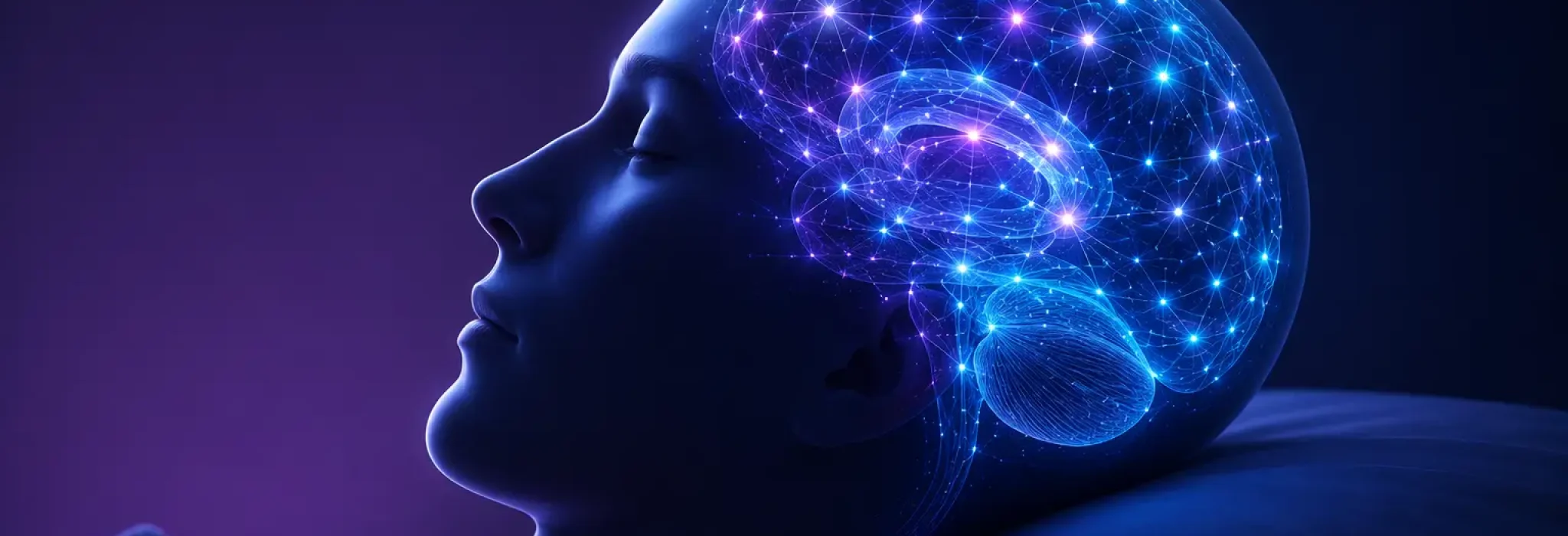
Sleeping does not mean that the brain “switches off.” On the contrary, while we rest, the brain remains highly active, organizing information, consolidating memories, regulating emotions, and carrying out many essential processes that support the body and mind.
Sleep occurs in cycles that repeat several times throughout the night. Each cycle alternates between light sleep, deep sleep, and REM sleep, with each stage playing an important role in physical and mental restoration.
Although dreams can occur during different stages of sleep, some phases are more likely to produce dreams that are vivid, complex, and easier to remember.
What Is REM Sleep?
REM stands for Rapid Eye Movement. It is one of the most studied stages of sleep because it is associated with intense brain activity.
During REM sleep, the eyes move rapidly beneath the eyelids while most of the body’s muscles remain temporarily relaxed. This mechanism helps prevent the body from physically acting out the movements experienced in a dream.
This is the stage when dreams are often more detailed, emotionally intense, and visually vivid. However, research shows that dreaming can also occur during other stages of sleep.
As the night progresses, REM periods gradually become longer. This is one reason why many people are more likely to remember their dreams when they wake up in the morning.
What Does Neuroscience Say About Dreams?
Despite scientific and technological advances, there is still no consensus about the exact function of dreams. Rather than a single explanation, researchers explore several theories that may complement one another.
Memory Consolidation
One of the main theories suggests that the brain uses sleep to consolidate memories, strengthening important information acquired throughout the day while reducing the relevance of less important details.
Emotional Processing
Another hypothesis proposes that dreams contribute to emotional processing, helping the brain deal with intense experiences and supporting psychological adaptation after meaningful events.
Simulation of Situations
Some researchers suggest that dreams act as a kind of safe environment where the brain can simulate challenges, conflicts, and possible threats. This allows it to explore different responses without the body being exposed to real-world consequences.
Integration of Information
Another theory proposes that dreams are a natural result of the brain’s intense activity during sleep. From this perspective, the brain organizes and integrates information processed throughout the day, creating narratives that reflect this internal activity.
Does Science Already Know Why We Dream?
Not yet.
Although neuroscience has greatly expanded our understanding of the brain during sleep, the exact function of dreams remains an open question.
Current evidence suggests that dreams may serve several purposes at the same time, involving processes such as memory consolidation, learning, creativity, emotional processing, and adaptation to the environment.
As research continues to advance, our understanding of dreams also evolves, making them one of the most fascinating areas of study in neuroscience.
Conclusion
Dreams are the result of a complex interaction between brain activity, different stages of sleep, and various cognitive processes that continue while we rest. Science has already uncovered many of the mechanisms involved, but researchers are still seeking answers to the fundamental question: why do we dream?
Although there is no definitive explanation yet, each new discovery expands our understanding of the human mind. Studying dreams is not only about understanding what happens while we sleep, but also about discovering how the brain organizes memories, processes emotions, supports learning, and shapes our conscious experience.
If you would like to explore this topic further, read also What Are Dreams? A Complete Guide, where you will find a broader overview of the history of dreams, their main psychological interpretations, their symbolism, and the different perspectives that seek to explain one of the greatest mysteries of human experience.
This blog is for informational and educational purposes only. The content presented here does not replace professional medical advice, diagnosis, or treatment. Always seek the advice of a physician or other qualified health provider with any questions you may have regarding a medical condition.